Fire warden awareness: free online course for New Zealand workplaces
What a fire warden usually does before, during and after an alarm, what New Zealand law actually says, and how evacuation schemes and trial evacuations work.
About 37 min
5 short modules
15 questions
85% to pass
About this course
Someone at work hands you a cap or a hi-vis vest and says you are the fire warden now. This course explains what wardens usually do before, during and after an alarm, how evacuation schemes work in New Zealand, and what the law does and does not say about wardens.
It has no hands-on practice, and it does not replace your building's scheme or drills. Those come first, along with the people who run them.
You can study and sit the assessment free, with no account. Fire and Emergency New Zealand also publishes free guidance on evacuation schemes, linked on this page, and you may prefer it. Pay only if you pass and want our certificate.
What you will learn
Explain what New Zealand law says, and does not say, about fire wardens
Describe the difference between an evacuation procedure and an evacuation scheme, and what owners must do to keep a scheme current
Prepare for the role by learning your building's routes, alarms, assembly point and the people who may need help
Apply the usual warden steps during an alarm: tell people to leave, check rooms, make sure 111 is called and report
Decide when to leave rather than carry on, including what Fire and Emergency New Zealand advises about extinguishers
Account for people at the assembly point and report clearly to the head warden and firefighters
Who this course is for
Staff who have been asked to act as a fire warden, floor warden or evacuation warden
Team leaders and duty managers who look after people during an evacuation
Office, hospitality and care workers who want to understand how an evacuation is meant to run
How the course works
1. The warden role and what the law saysWhat wardens usually do, what New Zealand law says about them, and which duties apply whether or not your building has wardens.About 5 min, ending with a quick check
2. How evacuation schemes workThe difference between a procedure and a scheme, which buildings need a scheme, and what owners must do to keep it current.About 6 min, ending with a quick check
3. Before an alarmWhat to learn about your building, how to keep escape routes clear, and how to plan for people who may need help.About 5 min, ending with a quick check
4. During an alarmTreating the alarm as real, clearing your area, calling 111, keeping yourself safe, and helping people who need it.About 7 min, ending with a quick check
5. After you get outStaying out, counting people, what to tell the head warden and firefighters, and what happens after the all clear.About 5 min, ending with a quick check
Sit the assessment15 questions drawn at random. You need 85% to pass, and there is no time limit. If you do not pass, you will see which topics to review, then try again with a new set of questions.Free, and so are retries
If you pass, the certificate is your choiceYou pay once, then get the PDF straight away and a copy by email. Your place is saved on this device the whole way, with no sign-up.NZ$24.90, optional
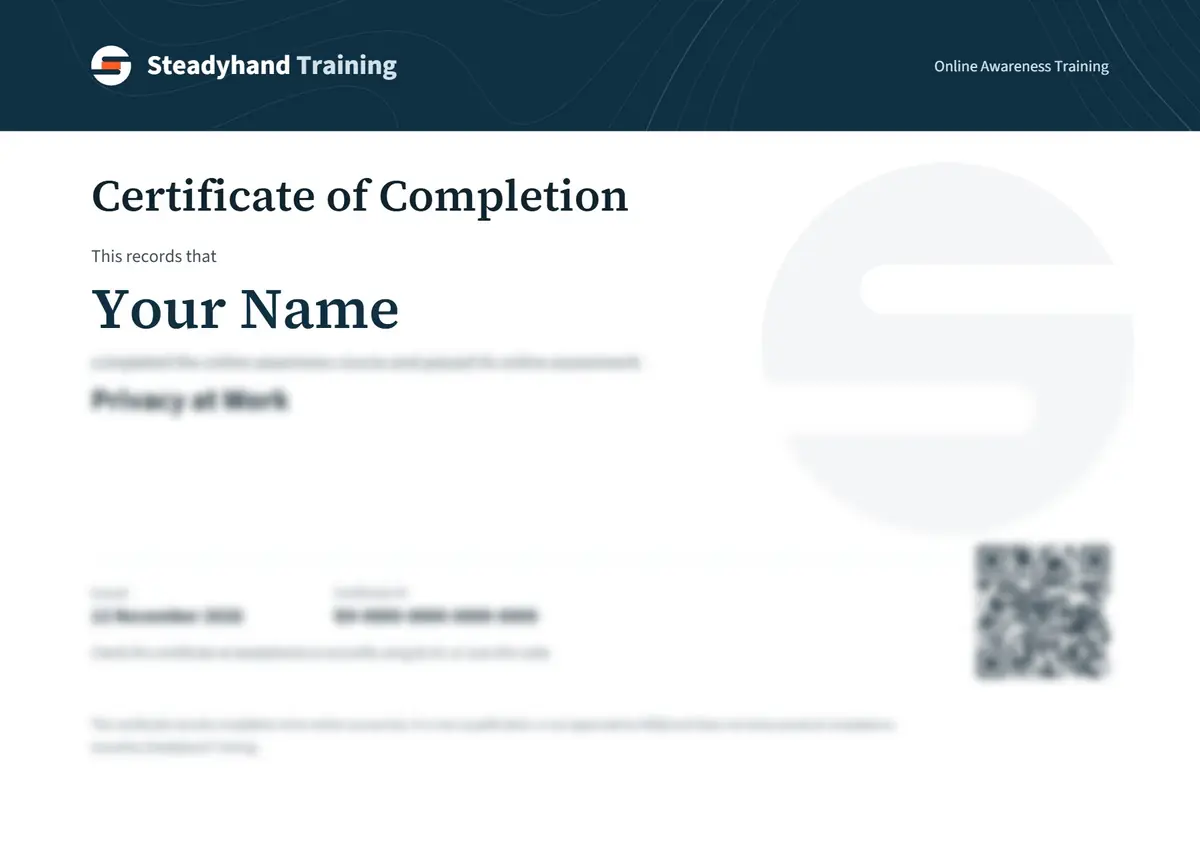
Sample. Yours shows your name, the course, the date and an ID anyone can check.
What this certificate does and does not show
This is general awareness of the warden role and the rules on evacuations. It is not legal advice, a fire safety assessment or a practical drill.
It does not replace your building's evacuation procedure or scheme, its trial evacuations, or any building-specific training your workplace must give you. If your scheme differs from anything here, follow your scheme.
It does not teach you how to use a fire extinguisher, hose reel or evacuation chair, or how to carry or move a person. Those are physical skills and need practical training.
Passing does not appoint you as a warden, and Fire and Emergency New Zealand has not reviewed or endorsed this course. Your workplace decides who holds the role.
Does the law say my workplace must have a fire warden?
No. The Fire and Emergency New Zealand Act 2017 and the 2018 evacuation regulations do not mention wardens, and Fire and Emergency New Zealand says they are not a requirement. Many buildings still use them, and your building's scheme may rely on them, so ask what yours says.
Will this make me a fire warden?
No. Passing shows you understood this awareness material. Your workplace decides who holds the role, and in many buildings it must also train staff on that building's own procedure. A general online course cannot do that.
Will I learn how to use a fire extinguisher?
No. That is a physical skill and needs hands-on practice. This course only covers what Fire and Emergency New Zealand advises about when an extinguisher might be used and when to leave. Ask your employer about practical training.
How often do we have to run fire drills?
It depends on your building. Where an approved scheme uses trial evacuations, the gap can be no more than six months. Where a scheme uses a training programme, people are trained and assessed at least that often, and trials happen if and when Fire and Emergency New Zealand requires them. Separately, WorkSafe says workplace emergency plans should be tested at least once a year, and business.govt.nz suggests practice drills at least twice a year.
Who should pay for warden training?
Ask your employer. The Health and Safety at Work Act 2015 says a business must not charge a worker for anything done or provided for health and safety. If your employer requires workplace health and safety training, ask whether they provide or fund it before purchasing this optional certificate. Study and assessment here are free, and our certificate is optional at NZ$24.90. This awareness course does not replace workplace-specific training or induction.
Will my employer accept the certificate?
Ask them first. Each employer decides what training it accepts, and your building may have its own requirements. You can study and sit the assessment free before deciding whether to buy anything.
Official sources behind this course
The lessons are original summaries of these sources. For your own situation, the source is what counts.
Version 1.1.1, last checked 2026-11-03. Approved for publication by our editor on 2026-11-09. Not reviewed by an external professional. How we check our content.
Your rights and duties under New Zealand's Health and Safety at Work Act: reporting hazards, stopping unsafe work, HSRs, PPE, and the changes from 1 April 2027.
For people just promoted from the floor: clear tasks, delegating, check-ins, short talks, fair rosters, health and safety, and what to pass up the line.
37 min
5 modules
Free to study
Certificate NZ$24.90if you pass
View course
Passed 2 or more courses? Buy their certificates together and pay 20% less.