Clear communication at work: free online awareness course for New Zealand workers
How to say the main thing first, listen, check understanding, write plainly, hand over between shifts and get an interpreter when someone needs one.
About 38 min
5 short modules
15 questions
80% to pass
About this course
Most mix-ups at work start small. A message that buries the point. A nod that did not mean yes. A handover that skipped the one thing the next shift needed. This course gives you simple habits for those moments, and shows you how to get an interpreter when someone needs one.
Some of it rests on New Zealand guidance, and some of it is plain common sense. We tell you which is which.
You can study and sit the assessment free, with no account. Free guides and modules from the Health Quality & Safety Commission, the Ministry for Ethnic Communities and Deaf Aotearoa are linked on this page, and you may prefer them. Pay only if you pass and want our certificate.
What you will learn
Put the main point first when you speak or write, and say what you need from the other person
Check understanding by asking people to explain in their own words, rather than asking 'Do you understand?'
Write short, plain messages and take phone messages someone can act on
Give and receive a handover that covers what changed, what is still to do and who is responsible
Adapt how you communicate with someone who is Deaf, hard of hearing, blind or has low vision
Find the right way to get an interpreter, and explain why a child should not be asked to interpret
Who this course is for
Office, hospitality, care and support workers who pass on information during a shift
Team leaders who brief staff or run handovers
Anyone who works with customers or clients who have limited English, or a hearing or vision difference
How the course works
1. Say the main thing firstA simple way to plan a message, and where the advice in this course comes from.About 5 min, ending with a quick check
2. Listening and checking understandingHow to show you are listening, why 'Do you understand?' lets you down, and how teach-back works.About 6 min, ending with a quick check
3. Plain messages and phone callsWriting so the reader can act, making clear phone calls and taking a message someone can use.About 6 min, ending with a quick check
4. Handovers between shiftsWhat New Zealand guidance covers, a five-part handover you can use anywhere, and how to take one well.About 6 min, ending with a quick check
5. Limited English, hearing and vision differencesPractical habits, how to get an interpreter, why a child or relative is usually the wrong choice, and what to do in an emergency.About 9 min, ending with a quick check
Sit the assessment15 questions drawn at random. You need 80% to pass, and there is no time limit. If you do not pass, you will see which topics to review, then try again with a new set of questions.Free, and so are retries
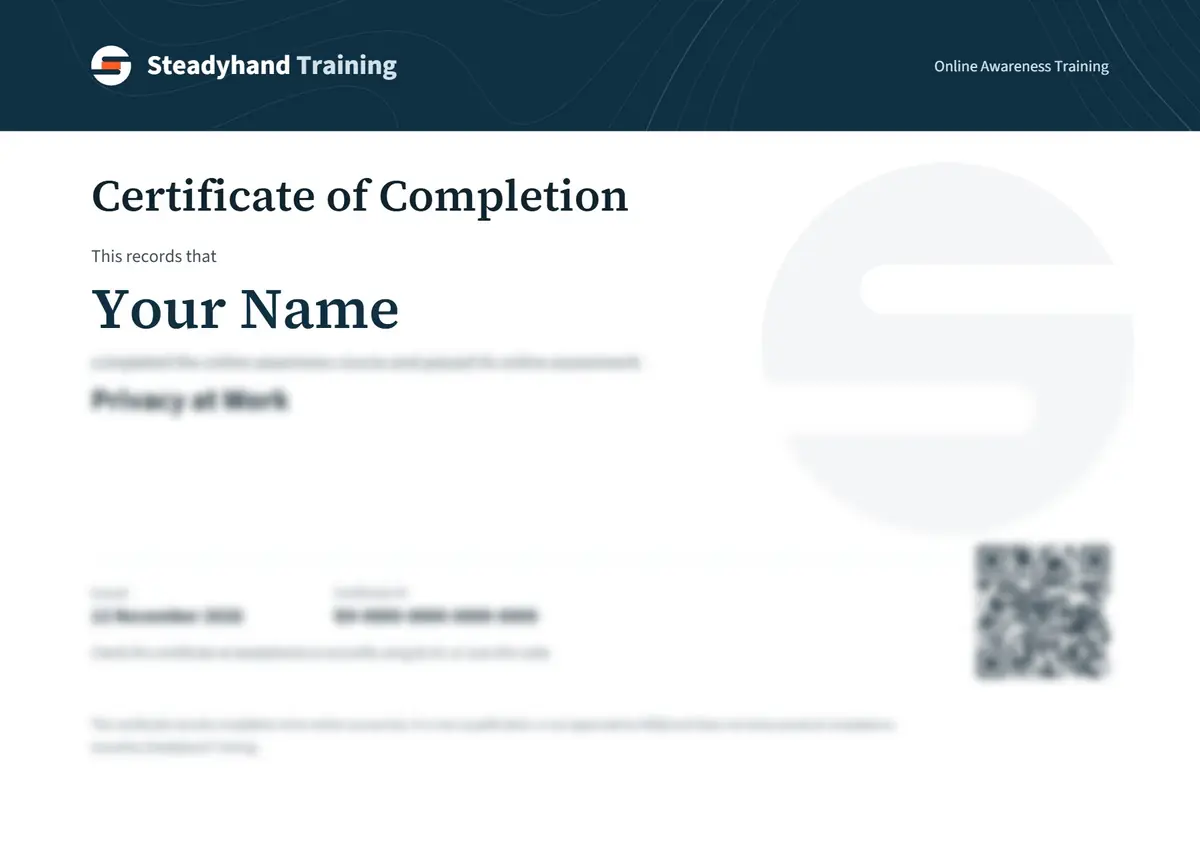
If you pass, the certificate is your choiceYou pay once, then get the PDF straight away and a copy by email. Your place is saved on this device the whole way, with no sign-up.NZ$24.90, optional
Sample. Yours shows your name, the course, the date and an ID anyone can check.
What this certificate does and does not show
This is general awareness of everyday communication at work. It is not clinical training, interpreter training or a course in New Zealand Sign Language.
It does not replace your workplace's procedures. If your workplace has a set handover form or a rule about interpreters, follow it.
The phone and handover checklists are our own practical suggestions. Where we rely on a New Zealand source, the lesson names it.
If you go straight to the assessment without completing the modules, your certificate is titled Certificate of Knowledge Assessment, because that is what it records.
No. Much of the New Zealand guidance on checking understanding and on handovers was written for health or aged care, and the lessons say so where that applies. The habits are general, and the examples include cafés, offices and cleaning.
What happened to Language Line?
The Ministry for Ethnic Communities says Language Line closed permanently on 30 September 2019. A person who needs to deal with a government agency can now call the agency and ask for an interpreter. The Ministry of Business, Innovation and Employment lists the agencies signed up.
Can a family member interpret if the person wants them to?
It depends on the matter. A relative may help with small everyday things if the person wants that. For anything private or important, offer a professional interpreter and explain why. A relative can still come along for support. In an emergency, get help first and use whoever can help.
Is there a law that tells me how to communicate at work?
Not a single one. Some rules apply in particular settings, such as the Code of Rights in health and disability services, and training rules under health and safety law. Most of this course is good practice or common sense, and the lessons say which.
Does this course teach NZ Sign Language?
No. It covers how to communicate respectfully with Deaf people and how to book an interpreter. If you want to learn NZSL, ask Deaf Aotearoa what is available.
Will my employer accept the certificate?
Ask before you buy it. Employers decide for themselves what training they accept, and your workplace may have its own communication or handover training. Studying and sitting the assessment are free, so you can decide afterwards.
Official sources behind this course
The lessons are original summaries of these sources. For your own situation, the source is what counts.
Version 1.0.0, last checked 2026-11-03. Approved for publication by our editor on 2026-11-09. Not reviewed by an external professional. How we check our content.
How to write factual, timely notes, correct mistakes honestly, handle incident and complaint records, and understand who may read records and how long they are kept.
Plain steps for upset customers: listen, say what you can do, be honest about refunds, hand over well, and leave and get help when it stops being safe.
39 min
5 modules
Free to study
Certificate NZ$24.90if you pass
View course
Passed 2 or more courses? Buy their certificates together and pay 20% less.