Disability awareness: free online course for New Zealand support workers
How disabled people in New Zealand describe disability, supporting people to lead their own lives, rights, communication, and what to do when a choice worries you.
About 37 min
5 short modules
15 questions
85% to pass
About this course
You may support someone in their own home, in a shared house or out in the community. Each day brings small questions. Which word should I use? Whose decision is this? What do I do if I think a choice is unsafe? This course works through those questions using New Zealand official sources and situations you will recognise.
It does not replace your employer's induction, or what a person tells you about their own life. When a disabled person tells you how they want something done, that comes first.
You can study and sit the assessment free, with no account. Free learning is also available from other bodies, including Te Pou's e-learning and the Whaimana: Support My Decisions website, both linked on this page. Pay only if you pass and want our certificate.
What you will learn
Use the words a person chooses for themselves, and explain what official sources mean by the terms they use
Recognise the kinds of barrier the Strategy describes, and report one you notice on shift
Support a person to make their own decision without making it for them
Describe rights under the Code of Rights and the UN Convention at an awareness level, and tell someone where they can take a complaint
Find out how a person wants to communicate by asking them, and know when to raise an interpreter or an alternate format
Raise a choice that worries you with your supervisor, without overriding it yourself
Protect a person's privacy and dignity during everyday support
Who this course is for
Support workers and caregivers who work with disabled people at home, in shared living or in the community
New staff at a disability service who want plain background alongside their employer's induction
Experienced workers who want to refresh what they know about language, rights and supported decision-making
How the course works
1. How disabled people describe disabilityWhy there is no single right word, what official sources say, and how barriers in society are part of disability.About 5 min, ending with a quick check
2. The person leads their own lifeWhat the Enabling Good Lives principles ask of you, and how to help someone decide without deciding for them.About 5 min, ending with a quick check
3. Rights: the Code and the UN ConventionWhat the Code of Rights and the Convention mean for your work, and what to do when someone wants to complain.About 5 min, ending with a quick check
4. Communication: ask, do not assumeNew Zealand Sign Language, Easy Read and other formats, and how to find out what works for each person.About 5 min, ending with a quick check
5. When a choice worries you, and privacy and dignityHow to respond when you disagree with a decision, who to tell, and how to protect someone's privacy and dignity.About 6 min, ending with a quick check
Sit the assessment15 questions drawn at random. You need 85% to pass, and there is no time limit. If you do not pass, you will see which topics to review, then try again with a new set of questions.Free, and so are retries
If you pass, the certificate is your choiceYou pay once, then get the PDF straight away and a copy by email. Your place is saved on this device the whole way, with no sign-up.NZ$24.90, optional
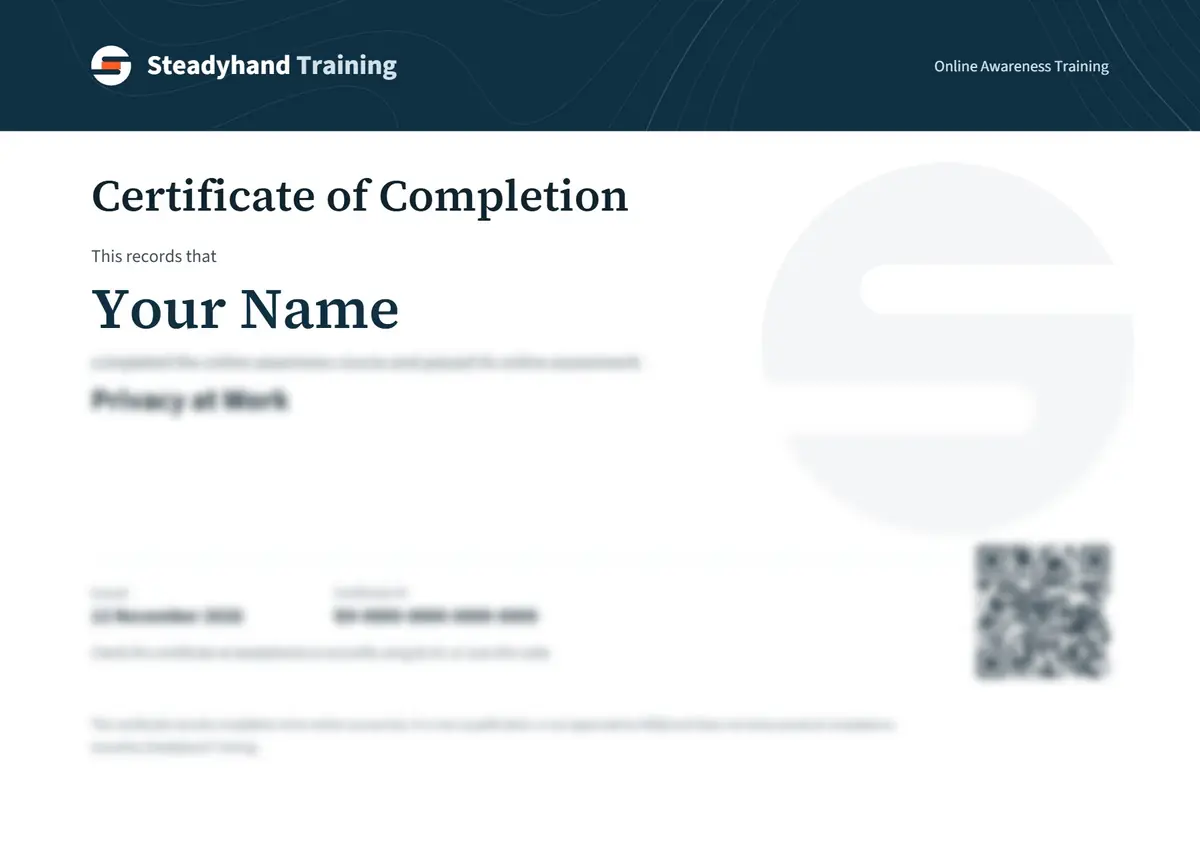
Sample. Yours shows your name, the course, the date and an ID anyone can check.
What this certificate does and does not show
This is general awareness drawn from official sources. It is not a qualification, it does not show you can do any practical task, and it does not replace your employer's induction.
It does not teach behaviour support, restraint, moving and handling, medication or safeguarding procedure. Your employer's policies and training cover those.
It makes no claim to meet Ngā Paerewa, a funding contract or any other standard, and it has no pay-equity value. Ask your employer what training counts for your role.
It cannot tell you about any one person's life. Disabled people are diverse, and what a person tells you about themselves comes before anything written here.
Which should I say: 'disabled person' or 'person with a disability'?
Use the words the person uses for themselves. The New Zealand Disability Strategy says there is no one way of talking about disability. If you do not know, ask. In general writing, official sources such as Whaikaha use 'disabled people'.
Can I do this instead of my employer's induction?
No. Your induction covers your employer's policies, the people you will support and what your role allows. This course only gives background, so ask your employer what you need to complete.
Will my employer accept the certificate?
Each employer decides what it accepts, so ask before you pay anything. Some may prefer Te Pou's e-learning or their own training. Studying here and sitting the assessment cost nothing, so asking first costs you nothing either.
Does this count towards Ngā Paerewa or pay equity?
We make no such claim. This course does not show that you or your employer meet Ngā Paerewa or a funding contract, and it is not designed to change your pay or your pay-equity position. Ask your employer or union about those.
Does this cover behaviour support, restraint or medication?
No. Those topics need your employer's policies and training, and some need practical assessment. If your job could involve them and nobody has trained you, tell your supervisor before you are asked to do them.
I support a family member without pay. Is this useful for me?
You can use it, although it is written for paid workers. Whaimana: Support My Decisions is written for family and whānau as well as paid supporters, and it is open to read.
Official sources behind this course
The lessons are original summaries of these sources. For your own situation, the source is what counts.
Version 1.1.0, last checked 2026-11-03. Approved for publication by our editor on 2026-11-09. Not reviewed by an external professional. How we check our content.
For your first weeks as a caregiver or support worker: who does what, people's rights, dignity, whānau, noticing and reporting changes, home visits and speaking up.
49 min
6 modules
Free to study
Certificate NZ$34.90if you pass
View course
Passed 2 or more courses? Buy their certificates together and pay 20% less.