Starting work in early childhood education: free online orientation course for New Zealand
Background for new relievers and staff in early childhood services: how the rules fit, ratios, safety checks, daily care and who to tell when worried.
About 37 min
5 short modules
15 questions
85% to pass
About this course
It is your first morning at a centre you have never seen. Who is in charge today? Where are the procedures? What if someone you do not know comes to collect a child? This course gives you the background to ask the right questions in your first weeks, using what the Ministry of Education and the Education Review Office publish.
It is general background for new relievers and staff who are not yet qualified. It does not replace your service's induction or policies, and it does not show that you or your service meet any licensing criterion.
You can study and sit the assessment free, with no account. Free official resources are linked on this page, including Te Whāriki Online and the Working together seminars that Oranga Tamariki runs with Child Matters. Pay only if you pass and want our certificate.
What you will learn
Describe how the Act, regulations, licensing criteria and your service's own policies fit together.
Recognise the role of the person responsible, and know what to ask on your first morning.
Describe how adult-to-child ratios work, including breaks and who counts, and know when to speak up.
Describe what a safety check involves, and why you may be asked for one more than once.
Recognise what the criteria expect on nappies, food, sleep and illness, and know that your service's procedures come first.
Know that medicine is given only under your service's policy and the right authority, and whom to ask.
Know when and whom to tell when you are worried about a child, and why you listen rather than question the child or investigate.
Who this course is for
New relievers, unqualified staff and students in their first weeks at an early childhood service.
People thinking about relief work in early childhood education who want to know what to expect.
How the course works
1. How the rules fit, and your first morningThe Act, regulations and licensing criteria, your service's own policies, the person responsible and what to ask when you arrive.About 5 min, ending with a quick check
2. Ratios and supervisionHow many adults must be there, who counts, what happens at breaks and on outings, who can collect a child and when to speak up.About 5 min, ending with a quick check
3. Safety checks and the Children's ActWhy you are checked before you start, what a check includes, what relievers can expect and the overseas conviction rules that began on 24 October 2026.About 5 min, ending with a quick check
4. Nappies, food, sleep, illness and medicineWhat the criteria expect at an awareness level, and why you follow your service's procedures. It does not teach you how to do the tasks.About 6 min, ending with a quick check
5. When you are worried about a childWhat you might notice, who to tell under your child protection policy, what not to do and how to contact Oranga Tamariki or Police. It does not teach investigation.About 5 min, ending with a quick check
Sit the assessment15 questions drawn at random. You need 85% to pass, and there is no time limit. If you do not pass, you will see which topics to review, then try again with a new set of questions.Free, and so are retries
If you pass, the certificate is your choiceYou pay once, then get the PDF straight away and a copy by email. Your place is saved on this device the whole way, with no sign-up.NZ$24.90, optional
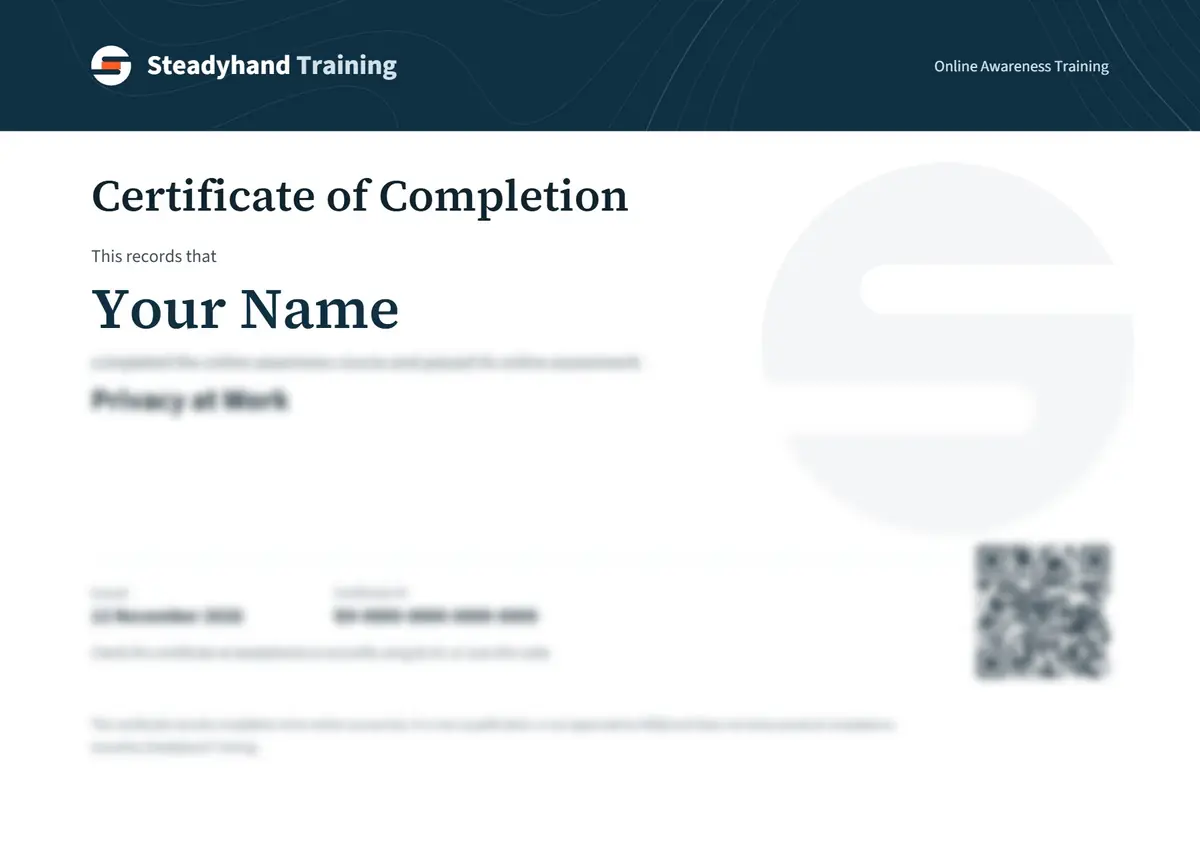
Sample. Yours shows your name, the course, the date and an ID anyone can check.
What this certificate does and does not show
This is general awareness drawn from official sources. It is not a qualification, it is not a safety check or Police vet, and it does not replace your service's induction or policies.
It does not teach first aid, how to give medicine or how to investigate or report abuse. Your service covers those, and some need separate training.
It makes no claim about any licensing criterion, Ngā Paerewa or pay equity. It does not show that you or your service meet any of them.
It is written around centre-based services. Home-based services, hospital-based services, kōhanga reo and certified playgroups differ in places.
It does not teach Te Whāriki. Your service works from it, so ask how.
I only relieve for a day at a time. Does this still apply to me?
Yes. You can count in the ratio from your first hour, and the Ministry of Education treats a reliever as a new core worker for each new assignment. Ask the questions in module 1 each time you go to a new service.
Can I start before my safety check is finished?
Generally no. The Ministry says children's workers are safety checked before they begin work. The Children's Act allows a narrow exception for short-term emergencies, for no more than 5 working days in a row, and ERO says the worker still needs a current Police vet. Your employer decides whether it applies. If you have been asked to start and nobody has checked you, raise it with the person responsible or the manager.
Does this count as a safety check, first aid or a qualification?
No. It is none of those. It does not replace a Police vet, and it does not teach first aid. It gives background so that you know what to expect and what to ask.
Does this show that a service meets the licensing criteria?
No. We make no claim about any licensing criterion, Ngā Paerewa or pay equity. It is not designed to change your pay. Only your service can show how it meets its criteria.
Will my service or agency accept the certificate?
Each service or agency decides what it accepts, so ask before you pay anything. Studying here and sitting the assessment cost nothing, so asking first costs you nothing either.
Can I get into trouble for reporting a concern about a child?
The Ministry of Education says that when you report a concern in good faith to Oranga Tamariki or Police, legal or disciplinary action cannot be taken against you. Ask your service to show you its child protection policy.
Official sources behind this course
The lessons are original summaries of these sources. For your own situation, the source is what counts.
Version 1.1.0, last checked 2026-11-03. Approved for publication by our editor on 2026-11-09. Not reviewed by an external professional. How we check our content.
Clean hands, gloves and masks, coughs and sneezes, staying home when sick, and speaking up. Plain-English infection prevention basics for NZ care and cleaning work.
38 min
6 modules
Free to study
Certificate NZ$24.90if you pass
View course
Passed 2 or more courses? Buy their certificates together and pay 20% less.