Food allergens: free online awareness course for New Zealand workers
Recognise allergy, intolerance, coeliac disease, the declared allergens and cross-contact, and know when to check, whom to tell and when to phone 111.
About 37 min
5 short modules
15 questions
85% to pass
About this course
A customer asks if the curry has peanuts in it. A parent says their child cannot have egg. The supplier sends a different brand of bread. A guess in any of these moments could seriously harm someone. This course explains what a food allergy is, which allergens must be declared, and when to check your workplace's allergen information and whom to ask, so that you do not have to guess.
It stays at awareness level. For a serious reaction, it tells you to phone 111 and follow the call-taker's instructions, your workplace's first aid procedure and the person's own action plan. It does not teach first aid or how to use an adrenaline device, and it cannot make any food safe for someone with an allergy.
You can study and sit the assessment free, with no account. Australia's National Allergy Council runs free All about Allergens courses, linked on this page, and Food Standards Australia New Zealand publishes free allergen labelling guidance. You may prefer them. Pay only if you pass and want our certificate.
What you will learn
Describe how a food allergy differs from an intolerance and from coeliac disease
Recognise the allergens that must be declared and their required names
Describe what the rules mean for packaged food and for food sold without a label
Recognise how cross-contact happens and the ways a workplace keeps allergens apart
Know when to check your workplace's allergen information instead of guessing, and whom to tell: the person in charge and the kitchen
Recognise the signs of a serious reaction, and know to phone 111 and follow the call-taker, your first aid procedure and the person's own plan
Who this course is for
Café, restaurant, takeaway, catering and bar staff who take orders or prepare food
Early childhood staff who prepare or serve food, including at kōhanga reo
Caregivers and support workers who prepare, serve or help with meals
Supervisors who want a plain-language refresher
How the course works
1. Allergy, intolerance and coeliac diseaseWhat each condition is, and why you take every request seriously without working out which one it is.About 4 min, ending with a quick check
2. The allergens that must be declaredThe required names, how they appear on a packet, and what the rules mean for food with no label.About 7 min, ending with a quick check
3. Cross-contact in a kitchenHow an allergen gets into food that should not have it, and the habits that keep it out.About 5 min, ending with a quick check
4. Taking an order and telling the kitchenHow to answer without guessing, what to check, what to say, and how to pass the message on.About 7 min, ending with a quick check
5. When someone has a reactionThe signs of a serious reaction, who to phone and whom to tell, and what happens afterwards.About 6 min, ending with a quick check
Sit the assessment15 questions drawn at random. You need 85% to pass, and there is no time limit. If you do not pass, you will see which topics to review, then try again with a new set of questions.Free, and so are retries
If you pass, the certificate is your choiceYou pay once, then get the PDF straight away and a copy by email. Your place is saved on this device the whole way, with no sign-up.NZ$24.90, optional
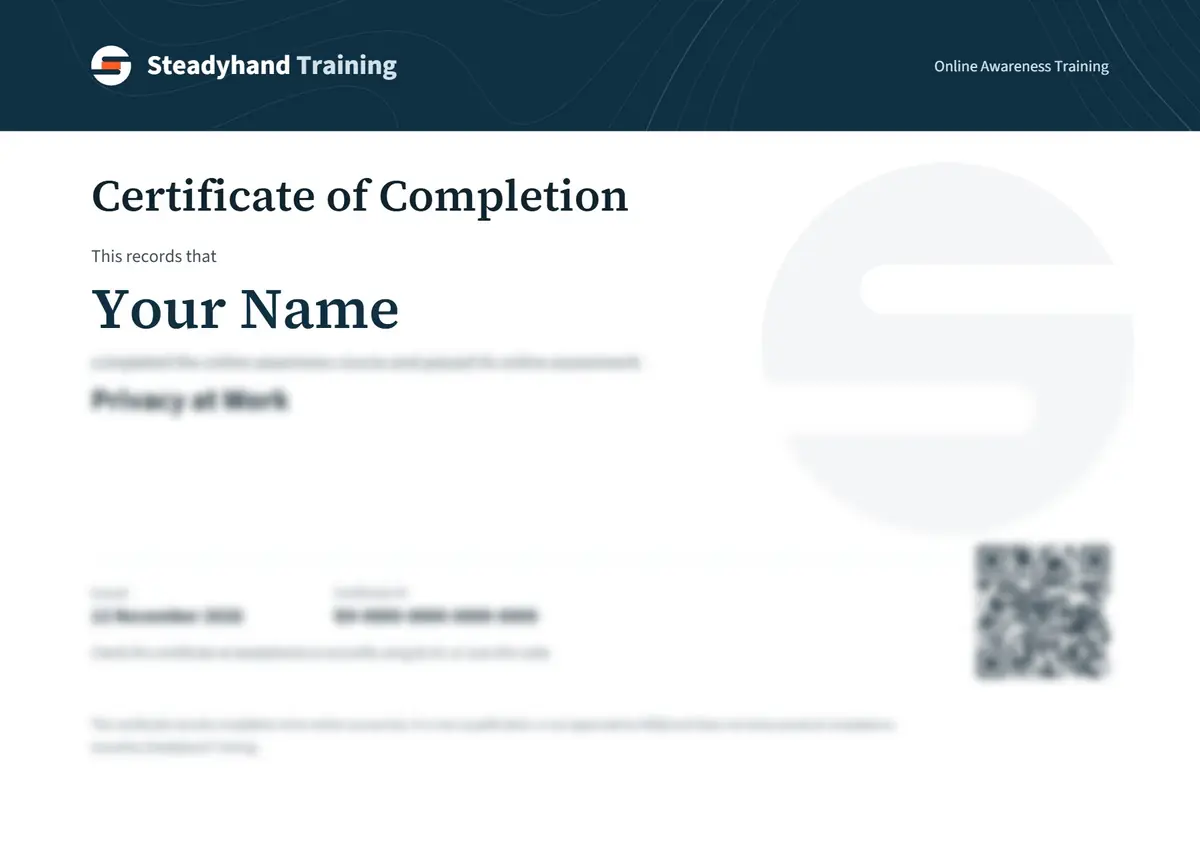
Sample. Yours shows your name, the course, the date and an ID anyone can check.
What this certificate does and does not show
It does not teach first aid or how to use an adrenaline device. In an emergency, phone 111 and follow the call-taker's instructions, your workplace's first aid procedure and the person's own action plan.
It cannot make any food safe for a person with an allergy. It is not allergen management certification, and it does not meet any food control plan or national programme training requirement or other duty a business has. Ask your workplace about training in its own allergen process.
It is not medical advice. People with allergies should talk to their doctor about their own condition.
It is not a qualification or a practical check. If your workplace's process differs from what you read here, follow your workplace's process and ask the person responsible.
No. It teaches you to recognise a serious reaction, phone 111 and follow the call-taker's instructions, your workplace's first aid procedure and the person's own action plan. It does not teach first aid or how to use an adrenaline device. Ask your workplace about that training.
Which allergens must be declared in New Zealand?
Wheat, plus barley, oats and rye when they contain gluten; fish, crustacean and mollusc; egg and milk; peanut, soy, sesame and lupin; nine named tree nuts (almond, Brazil nut, cashew, hazelnut, macadamia, pecan, pistachio, pine nut, walnut); and added sulphites at 10 mg/kg or more. FSANZ and MPI both publish the list, linked under sources.
Does food sold without a label still have to follow allergen rules?
Yes. A café meal or cabinet item may not need a label, but the business has to be able to tell customers what is in it, or display that close to the food, using the required names.
What if I honestly do not know whether a dish is safe?
Say so. Check your workplace's allergen information, ask the person in charge, and if you still cannot be sure, tell the customer. MPI advises people not to order food they are unsure is safe, so your answer helps them choose.
How does this compare with other free allergen training?
Australia's National Allergy Council runs free All about Allergens courses of about an hour, each with a certificate of completion, though they are written for Australia. This course is built on the New Zealand and joint sources listed here, and its certificate is optional at NZ$24.90. We are independent of the National Allergy Council and of MPI.
Will my workplace accept the certificate?
Check with them before you pay. A food business has its own allergen process, and it may prefer particular allergen training. The lessons and assessment cost nothing, so you can decide afterwards.
Official sources behind this course
The lessons are original summaries of these sources. For your own situation, the source is what counts.
Food Act 2014 New Zealand Legislation. Checked 2026-11-03.
Version 1.1.1, last checked 2026-11-03. Approved for publication by our editor on 2026-11-09. Not reviewed by an external professional. How we check our content.
Everyday food safety for NZ food workers, using MPI's figures: handwashing, staying away when sick, keeping food apart, temperatures, cooling, reheating and date marks.
Clean before you disinfect, read labels and safety data sheets, never mix products, handle wet floors and lone work, and know what to leave alone and report.
37 min
5 modules
Free to study
Certificate NZ$24.90if you pass
View course
Passed 2 or more courses? Buy their certificates together and pay 20% less.