Hotel housekeeping safety: free online awareness course for New Zealand accommodation workers
Practical safety for room attendants and laundry staff in NZ hotels and motels: workload strain, needles and drugs, lone work, harassment, guest privacy and heat.
About 42 min
5 short modules
15 questions
85% to pass
About this course
Housekeeping in accommodation means working alone in other people's rooms, against the clock, with whatever guests leave behind. This course covers what is specific to that work in New Zealand hotels, motels, backpackers and serviced apartments: the strain of a room-servicing shift, needles and other things found in rooms, guests who make you feel unsafe, guests' privacy, and laundry hazards.
It is written in plain English for people who may be new to the country or to the job, and it draws on WorkSafe, Health New Zealand, Police, Employment New Zealand and Privacy Commissioner guidance. It works alongside your hotel's induction and procedures, not instead of them. It does not repeat general cleaning, chemical or infection basics, which have their own courses.
You can study and sit the assessment free, with no account. We did not find a free official housekeeping safety course, but the WorkSafe guidance listed in the sources is free to read. Pay only if you pass and want our certificate. If your employer requires workplace health and safety training, ask whether they provide or fund it before purchasing this optional certificate.
What you will learn
Recognise the strain points in a room-servicing shift and report them in a way that can change the task
Respond safely when you find needles, blood, drugs or a person in trouble in a room
Explain what your employer must do about lone work and harassment by guests, and what you can do if you feel unsafe
Protect guests' personal information and handle requests for information or access to rooms
Recognise heat, machinery and soiled linen hazards in the laundry, and use your right to raise concerns
Who this course is for
Room attendants and housekeepers in hotels, motels, backpackers and serviced apartments
Housekeeping supervisors and team leaders
Laundry staff in accommodation businesses
People new to New Zealand or to housekeeping, including people with English as a second language
How the course works
1. Your shift, your body and the room countWhere a room-servicing shift strains your body and your time, and how to report it so the task can change.About 6 min, ending with a quick check
2. Needles, blood, drugs and people in troubleWhat official guidance says to do, and not do, when a room holds something dangerous or someone who needs help.About 7 min, ending with a quick check
3. Working alone with guestsLone work, harassment and feeling unsafe in guest rooms, and what your employer must do about it.About 6 min, ending with a quick check
4. Guests' privacy and room securityTreating room lists, guest details and belongings as private, and handling requests for information or access.About 5 min, ending with a quick check
5. Laundry hazards and speaking upHeat, hot machinery and soiled linen in the laundry, and your rights when something is not safe.About 6 min, ending with a quick check
Sit the assessment15 questions drawn at random. You need 85% to pass, and there is no time limit. If you do not pass, you will see which topics to review, then try again with a new set of questions.Free, and so are retries
If you pass, the certificate is your choiceYou pay once, then get the PDF straight away and a copy by email. Your place is saved on this device the whole way, with no sign-up.NZ$24.90, optional
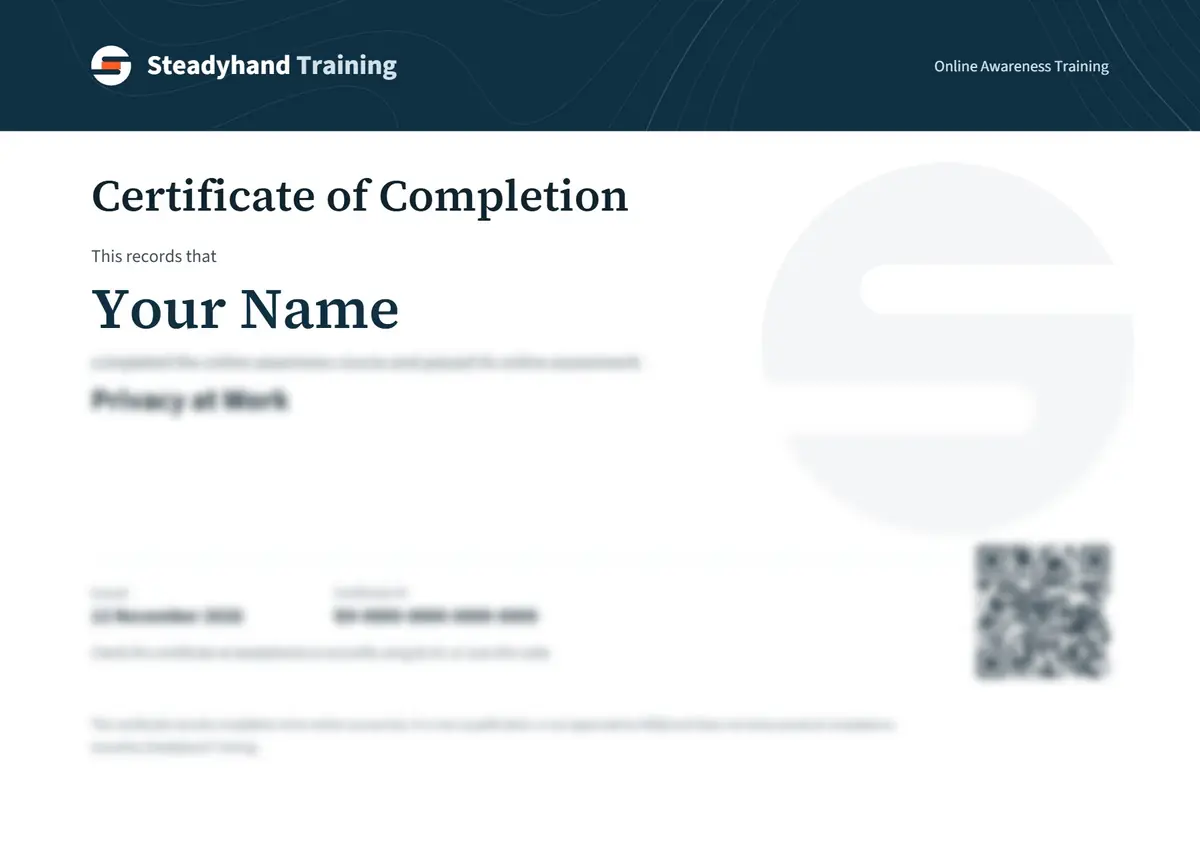
Sample. Yours shows your name, the course, the date and an ID anyone can check.
What this certificate does and does not show
It does not replace your employer's induction, procedures, supervision or training on your site's chemicals, equipment and laundry machines. Those come first.
It is not a qualification and there is no practical assessment. A pass does not show that you can do any task safely, or that a business has met its duties.
It does not teach you to clean up blood or body fluids, or to pick up needles and other sharps. It covers only what to do first and who to call. If your workplace wants you to do these tasks, it needs to train and equip you first.
It is not first aid training, medical advice or legal advice. In an emergency, call 111.
Under the Health and Safety at Work Act 2015, a business must not charge workers for health and safety. If your employer requires workplace health and safety training, ask whether they provide or fund it before purchasing this optional certificate. This awareness course does not replace workplace-specific training or induction.
It describes the law in force in November 2026. The Health and Safety at Work Amendment Act 2026 changes some duties from 1 April 2027, so check WorkSafe's website for updates after that date.
Does this course teach me to clean up needles or blood?
No. It covers what to do first: stop, keep away, keep others out and report. Picking up sharps or cleaning up blood and body fluids needs hands-on training and equipment from your workplace.
My employer told me to do a safety course. Do I have to pay?
The Health and Safety at Work Act 2015 says a business must not charge workers for anything done or provided for health and safety. If your employer requires workplace health and safety training, ask whether they provide or fund it before purchasing this optional certificate. This awareness course does not replace workplace-specific training or induction.
Will my employer accept this certificate?
Ask them first. Each employer decides what training it accepts. You can study and sit the assessment free before deciding whether to buy the NZ$24.90 certificate.
Does WorkSafe or another government agency offer a free housekeeping safety course?
We searched on 3 November 2026 and did not find a free official housekeeping safety course in New Zealand. WorkSafe's guidance on hotels and accommodation, lone work, sexual harassment and extreme heat is free to read, and this course draws on it.
English is not my first language. Is there help?
This course uses plain English. WorkSafe's fact sheet on your health and safety rights is available in many languages, including Samoan, Tongan, Hindi, Chinese and Tagalog. WorkSafe also says employers must make sure, so far as is reasonably practicable, that the training they give is easy for each worker to understand.
Official sources behind this course
The lessons are original summaries of these sources. For your own situation, the source is what counts.
Version 1.1.1, last checked 2026-11-03. Approved for publication by our editor on 2026-11-09. Not reviewed by an external professional. How we check our content.
Clean before you disinfect, read labels and safety data sheets, never mix products, handle wet floors and lone work, and know what to leave alone and report.
Spot what makes a manual task risky, report it early and know what better controls look like. Drawn from WorkSafe guidance. Not lifting technique or moving people.
Clean hands, gloves and masks, coughs and sneezes, staying home when sick, and speaking up. Plain-English infection prevention basics for NZ care and cleaning work.
38 min
6 modules
Free to study
Certificate NZ$24.90if you pass
View course
Passed 2 or more courses? Buy their certificates together and pay 20% less.